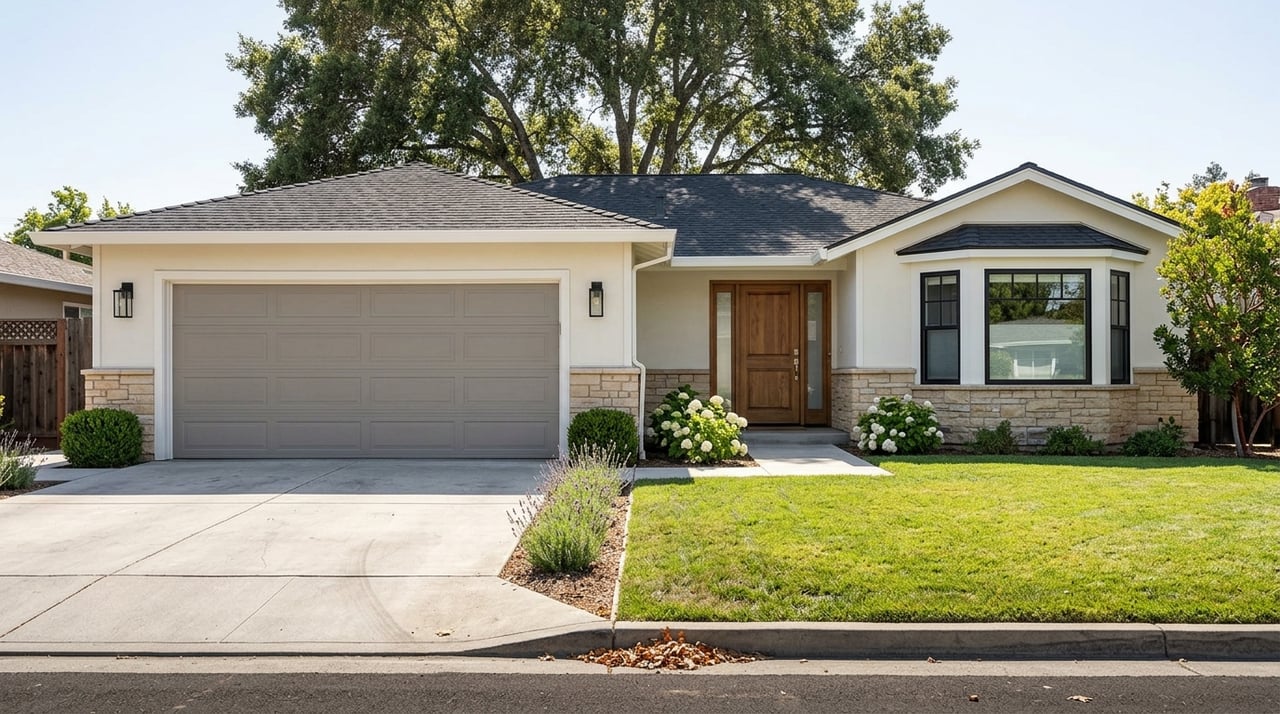
Balancing Commute And Space When You Buy In Morgan Hill
June 25, 2026
June 25, 2026
Are you willing to trade a shorter commute for more room to live? That question comes up often for Silicon Valley buyers, especially when closer-in markets feel tight on space and high on price. If Morgan Hill is on your radar, it helps to look at the decision with both lifestyle and logistics in mind. In this guide, you’ll see how commute patterns, lot sizes, amenities, and hybrid work can shape whether Morgan Hill feels like the right fit for you. Let’s dive in.
Morgan Hill sits at the southern edge of Silicon Valley, about 20 miles south of downtown San Jose and roughly 13 miles north of Gilroy. The city describes itself through a mix of open space, rolling hills, vineyards, parks, downtown dining, sports facilities, and community events. For many buyers, that makes Morgan Hill feel like more than a cheaper alternative. It feels like a different way of living.
That distinction matters when you compare Morgan Hill to closer-in South Bay communities. You are not just looking at a map and measuring miles to the office. You are also weighing how much day-to-day breathing room, outdoor access, and neighborhood variety you want in exchange for a longer trip north.
Morgan Hill also offers more built-in convenience than some buyers expect. According to the city, downtown has more than 100 independent businesses, over 1,000 parking spaces, regular events, and four downtown parks. Across the broader city, there are 23 parks, an aquatics center, and an outdoor sports complex, which can make everyday life feel more local and less dependent on frequent drives into San Jose.
Morgan Hill is still a high-cost market by most standards, but it can look more attainable than some nearby Silicon Valley towns. The U.S. Census Bureau’s 2020 to 2024 QuickFacts lists the median value of owner-occupied homes in Morgan Hill at $1,210,200. That compares with $1,490,600 for Santa Clara County and more than $2,000,000 in Los Gatos.
For buyers, the key takeaway is simple. Morgan Hill may offer a different balance of price and space than more central communities. You may not find a bargain, but you may find that your budget stretches differently here, especially if lot size or overall square footage matters to you.
For most commuters, Highway 101 is the main connection between Morgan Hill and the rest of the South Bay. City documents note that 101 provides north-south access to San Jose and Gilroy, which is a big reason Morgan Hill stays on the shortlist for buyers who work along that corridor.
If your office is in San Jose, Santa Clara, or another location with practical highway access, Morgan Hill may feel workable. Still, the commute should be treated as a core part of your home search, not an afterthought. A home that feels perfect on weekends can feel very different if your weekday routine becomes stressful.
Morgan Hill does have Caltrain service, and the station is located in the downtown area. However, current 2026 service information shows a limited, commute-oriented pattern rather than all-day frequent rail. South Santa Clara County passengers can use the South County Connector, and diesel trains continue to provide four weekday round trips between San Jose Diridon and Gilroy with transfers at San Jose Diridon.
That means train access can be useful, but it is not a one-size-fits-all solution. Before you assume rail will simplify your schedule, check whether your actual work hours match the available service. For some buyers, Caltrain is a helpful backup or part-time option rather than the main plan.
The Morgan Hill Caltrain station can support a mixed commute. VTA lists 486 parking spaces at the station and notes connections to Caltrain and MST. That setup can work well if you want the option to drive to the station and take the train on certain days.
This is one of the more realistic commute patterns for Morgan Hill households. You may drive most days, use the train selectively, or switch between both depending on meetings and office requirements. Flexibility helps, but so does being honest about what you are willing to do every week.
The Census Bureau lists Morgan Hill’s mean travel time to work at 33.5 minutes. For Santa Clara County overall, the mean is 26.2 minutes. That gap helps explain the trade-off clearly: many buyers choose Morgan Hill because they believe the added space and lifestyle benefits are worth the extra commute time.
One of the biggest mistakes buyers make is assuming all Morgan Hill homes sit on large lots. In reality, lot size varies widely depending on zoning, neighborhood, and housing type. That variation is actually part of what makes the market interesting.
The city’s zoning table includes estate districts at 10 acres, 2.5 acres, and 1 acre. It also includes detached residential districts at 20,000, 12,000, 9,000, 7,000, and 4,500 square feet. So when you say you want “more space” in Morgan Hill, it helps to define whether you mean a larger home, a larger yard, more privacy, or flexibility for future use.
Recent city project examples show how broad the range can be. Serene Hills includes seven single-family lots ranging from about 43,571 to 51,890 square feet. Edmundson-Pancal includes eight lots ranging from 7,008 to 14,069 square feet, which is still meaningful space for many buyers but very different from estate-style parcels.
City residential design standards also separate detached homes on lots of 7,000 square feet and up from smaller or more compact housing types. In practical terms, Morgan Hill is not a single product. It is a market where your experience can differ a lot from one subdivision to the next.
Hybrid work has made Morgan Hill more realistic for many Silicon Valley buyers. The Bureau of Labor Statistics reports that 35% of employed people did some or all of their work at home on days they worked in 2023, up from 24% in 2019. For households that do not need to commute five days a week, a longer drive can feel much more manageable.
This matters especially if you value a home office, a separate guest space, or simply more room to spread out. A commute that happens two or three days a week often feels different from one that happens every weekday. In that case, the extra space at home can play a bigger role in your overall quality of life.
Morgan Hill also appears well positioned for home-based work needs. Census QuickFacts shows that 98.2% of households have a computer and 96.7% have a broadband subscription. While every buyer should still evaluate a specific property for their own work setup, the city data supports the idea that Morgan Hill can function well for hybrid households.
When buyers focus only on drive time, they can miss the bigger picture. Morgan Hill’s appeal often comes from how you spend the hours when you are not commuting. Parks, downtown businesses, sports facilities, and local events can all add value to your weekly routine.
That local amenity base can reduce the feeling that you are always traveling elsewhere for daily life. If you can handle errands, dining, outdoor time, and recreation close to home, the trade-off may feel more balanced. This is one reason Morgan Hill often works best for buyers who are not just chasing square footage, but also looking for a small-city environment with everyday convenience.
If you are considering Morgan Hill, these questions can help you make a clearer decision:
These questions help turn a broad idea into a practical decision. They also help you avoid choosing Morgan Hill for the wrong reason. If you want more room but rarely use the added space, or if the commute wears you down quickly, the trade-off may not feel worth it.
The best Morgan Hill decision usually comes from matching your home search to your actual routine. Think about your office schedule, your tolerance for driving, and how you want your home to function during the week. If your household values extra room, flexible layouts, and more local outdoor amenities, Morgan Hill may be a strong fit.
It also helps to compare properties through a practical lens. A smaller lot near downtown may support one lifestyle, while a larger lot farther out may support another. The right choice depends less on general market labels and more on how you plan to live.
If you want help weighing commute realities against space, budget, and neighborhood options in South Santa Clara County, Alexandra Celo-Cruz can help you evaluate the trade-offs clearly and find a home that fits both your schedule and your long-term goals.
Stay up to date on the latest real estate trends.
Work with Alexandra for a seamless real estate experience. She helps buyers visualize dream home potential through thoughtful enhancements and guides sellers in preparing and presenting their homes to attract maximum interest and profits. With Alexandra's expertise and creative approach, your goals are within reach.
Alexandra Celo-Cruz | CA DRE# 01482661
236 N SANTA CRUZ AVE STE 104 LOS GATOS CA 95030